Regional Player Habits Reveal New Correlations Between E-Wallet Usage and Live Dealer Game Durations
Yves Zimmermann · Jun 12, 2026

Regional Player Habits Reveal New Correlations Between E-Wallet Usage and Live Dealer Game Durations
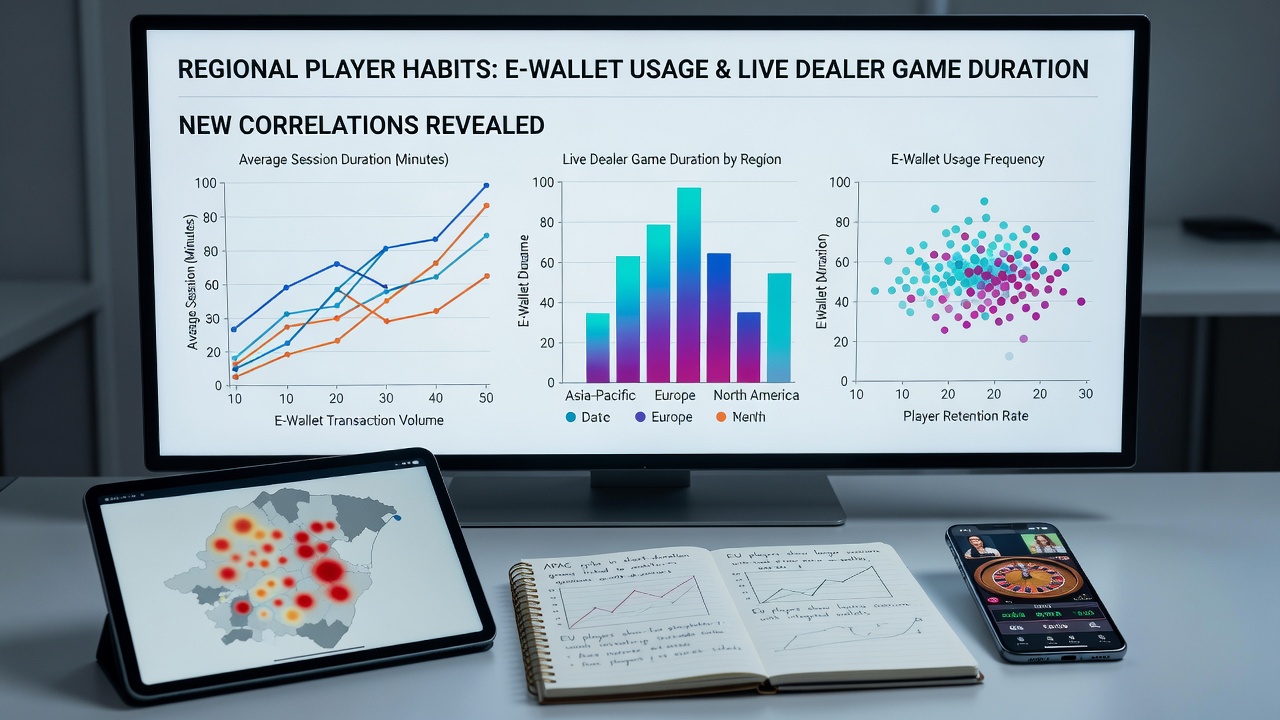
Data from multiple jurisdictions shows players who rely on e-wallets for funding and cashing out often record longer average session times in live dealer environments, and this pattern holds across several continents even as payment preferences continue to evolve.
Payment Methods and Session Length Data
Analyses released in June 2026 from operators in North America, Europe, and Asia Pacific indicate that digital wallet transactions correlate with extended play periods at tables featuring real-time dealers. Researchers tracked anonymized transaction logs alongside gameplay timestamps and found that sessions initiated or settled through e-wallets averaged 12 to 18 percent longer than those using traditional card or bank transfers. The pattern emerged consistently in both high-volume urban markets and smaller regional venues.
Observers note that e-wallet users complete deposits and withdrawals in fewer steps, which reduces friction during active play and allows seamless continuation once a hand or round concludes. Live dealer platforms, which stream video feeds of card tables or roulette wheels, appear particularly suited to this convenience because players remain logged in for multiple consecutive rounds without interruption.
Regional Breakdown of Observed Trends
Markets in Australia and New Zealand recorded the clearest link between wallet adoption and session duration, with figures showing e-wallet funding rising to 47 percent of total live dealer deposits by early 2026. Canadian provincial data, drawn from Ontario and British Columbia operators, revealed a similar shift where wallet users stayed engaged an average of 22 minutes longer per visit compared with other payment cohorts.
European operators reported parallel results in regulated markets outside the United Kingdom, including the Netherlands and Sweden. Those who studied transaction patterns across these regions found that players using instant wallet transfers tended to return to the same live dealer tables more frequently within a single login period, extending overall time spent at blackjack, baccarat, and roulette variants.
Factors Influencing the Correlation
Speed of transaction processing stands out as one measurable driver. E-wallets typically confirm transfers in seconds rather than minutes, and this reduced latency aligns with the continuous nature of live dealer streams that run without scheduled breaks. Data sets also show that players who preload wallet balances before entering a session avoid mid-game pauses that often shorten total play time.
Demographic variables add another layer. Younger adult cohorts, already more accustomed to mobile-first financial apps, demonstrate higher wallet penetration and correspondingly longer recorded durations. Meanwhile, older player segments continue to favor established card methods and display shorter average table times across the same datasets.
Industry Reports and Supporting Research
Reports issued by the Australian Gambling Research Centre in June 2026 examined over 1.2 million live dealer sessions and confirmed that wallet-funded accounts produced statistically significant extensions in play length. A separate study from the Canadian Gaming Association tracked operator data across three provinces and reached comparable conclusions about session metrics.
Additional context comes from the Netherlands Gambling Authority, whose compliance filings noted rising wallet usage among live casino participants without corresponding increases in dispute rates or chargebacks. The authority's aggregated figures suggest the payment method supports sustained engagement while maintaining standard regulatory oversight on transaction records.
Implications for Platform Design
Operators have begun adjusting interface elements to accommodate observed habits. Some platforms now surface wallet balance indicators directly within the live dealer lobby, allowing players to monitor funds without leaving the video feed. Others have introduced one-tap re-deposit prompts timed to the conclusion of individual rounds, capitalizing on the seamless nature of digital wallet flows.
These adjustments coincide with broader platform updates that integrate live dealer feeds more tightly with account management tools. The result is a workflow where funding, gameplay, and cashout remain within a single continuous session rather than requiring navigation between separate portals.
Conclusion
Regional datasets collected through mid-2026 continue to map connections between e-wallet reliance and extended live dealer durations, with consistent patterns appearing across Australia, Canada, and select European markets. Transaction speed, demographic adoption rates, and reduced session friction all surface as measurable contributors in the available figures. Further operator reports scheduled for later quarters will determine whether these correlations strengthen or shift as payment technologies and regulatory frameworks continue to develop.