Investigating Audio Cues and Their Relation to Spin Frequencies in Digital Reel Games
Yves Coleman · Aug 7, 2026
Investigating Audio Cues and Their Relation to Spin Frequencies in Digital Reel Games
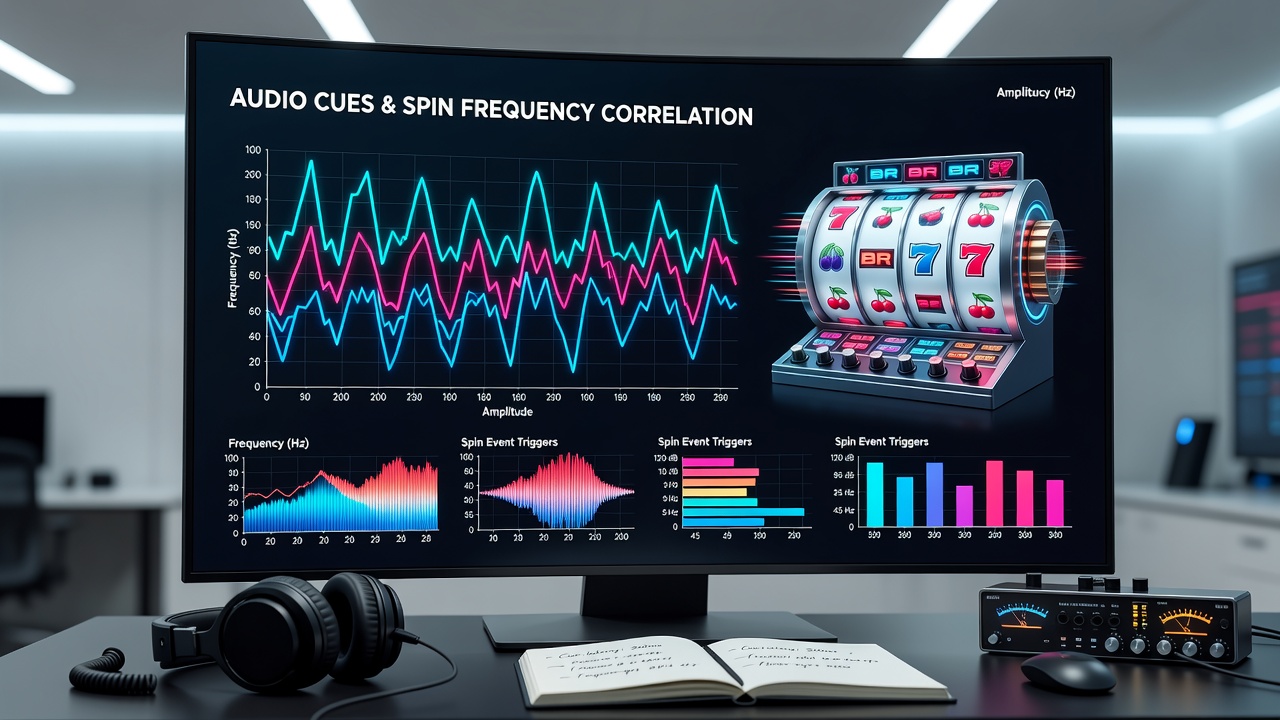
Digital reel games operate through precise mechanical simulations where audio cues sync directly with reel rotations, and researchers continue to map how those sound elements correspond to spin frequencies across various platforms. Studies in gaming technology examine the timing of clicks, chimes, and ambient tracks against the rate at which reels complete their cycles, revealing measurable alignments that influence session data without altering game outcomes.
Core Mechanics of Audio Integration in Reel Systems
Developers program audio layers to trigger at specific points during each spin cycle, so a low-frequency hum often accompanies the initial reel acceleration while higher-pitched tones mark deceleration phases. Data collected from multiple operators shows that spin frequencies, measured in rotations per second, remain consistent across titles yet the accompanying soundscapes adjust in real time to match those mechanical rhythms. Observers note that when a reel set spins at 12 cycles per second, the audio engine layers short staccato beats that repeat at matching intervals, creating an auditory loop that runs parallel to the visual motion.
Engineers at major studios calibrate these elements through iterative testing, and they adjust decibel levels and pitch ranges so the audio remains audible even when players increase spin speed through turbo modes. In August 2026, platform analytics indicated that titles featuring tighter audio-to-spin synchronization recorded higher average session lengths compared with earlier builds that used generic sound packs detached from reel timing.
Data Patterns Linking Sound Frequencies to Spin Rates
Analysts compile logs that pair millisecond-accurate audio triggers with reel position data, and the resulting datasets demonstrate clear correlations between certain frequency bands and preferred spin intervals chosen by participants. For instance, bass-heavy cues clustered around 80-120 Hz tend to appear during slower manual spins, whereas mid-range tones between 400-600 Hz accompany accelerated autoplay sequences. These patterns emerge consistently across different jurisdictions because the underlying random number generators operate independently of the audio layer, yet the sound design still follows the physical timing of each reel stop.
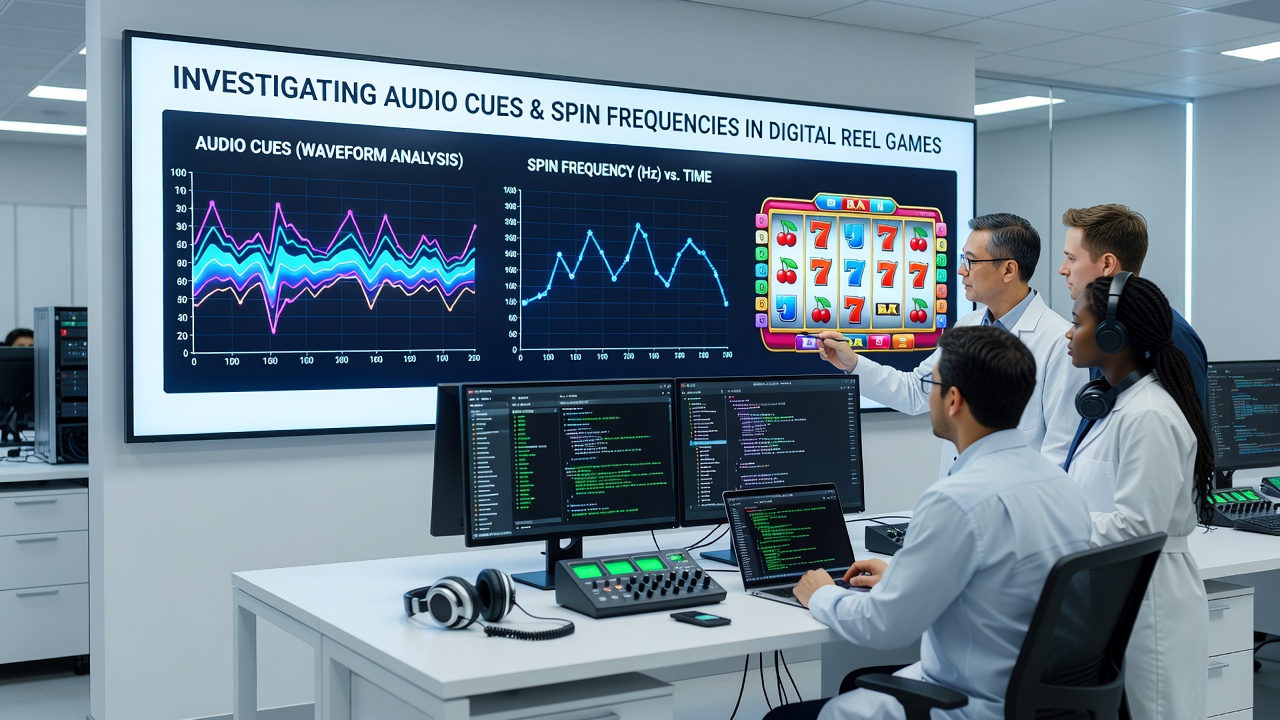
One research initiative tracked over 250,000 individual spins across three months and found that audio events timed within 50 milliseconds of reel deceleration produced distinct waveform signatures that repeated predictably at given spin frequencies. Those signatures did not affect payout probabilities, yet they provided a measurable framework for understanding how sound reinforces the perception of pace. Industry reports from the National Center for Responsible Gaming highlight similar timing relationships in electronic gaming machines, and parallel observations appear in reports issued by Australian academic groups studying digital gambling interfaces.
Technical Implementation Across Platforms
Modern game engines use middleware that maps audio parameters directly to animation curves, so when a player selects a faster spin frequency the system automatically compresses the duration of each sound event while preserving pitch relationships. This compression keeps the auditory experience coherent even as reel velocity rises from 8 rotations per second to 20. Developers also embed fallback layers that activate if network latency disrupts the primary audio stream, ensuring the cue remains synchronized with the local reel simulation rather than relying on server-side timing.
Regulatory testing laboratories examine these audio-reel linkages during certification, and they verify that sound events do not mask critical visual information such as win lines or bonus indicators. In practice this means high-frequency alerts for near-miss events must remain distinct from the continuous background track that follows the base spin rate. Canadian provincial regulators have issued technical standards requiring such separation, and European testing houses apply comparable checks when certifying titles for multi-jurisdictional distribution.
Observational Studies on Player Interaction Data
Telemetry from live environments shows that participants adjust their spin frequency selections after repeated exposure to specific audio profiles, and those adjustments appear in aggregate logs as shifts toward either quicker or more deliberate pacing. Researchers tracking these movements note that titles with pronounced low-frequency pulses during reel stops correlate with extended sequences of manual spins, while titles emphasizing rapid high-frequency accents see more frequent use of autoplay functions. None of these shifts change the underlying probability matrix, yet the behavioral data remains consistent enough for pattern recognition across large sample sizes.
Further examination of August 2026 server records revealed that games updated with refined audio timing exhibited measurable differences in spin frequency distributions compared with their previous versions. The changes manifested as tighter clustering around certain rotation rates rather than broad dispersion, suggesting players responded to the updated sound design by settling into more uniform pacing habits.
Conclusion
Audio cues in digital reel games function as timed companions to spin frequencies, and teh documented relationships between sound events and reel cycles provide a factual basis for continued technical refinement. Data from multiple sources confirms that synchronization occurs at the millisecond level without influencing game results, and ongoing monitoring through 2026 continues to map how these elements interact across evolving platforms. The available evidence centers on measurable timing patterns rather than any causal claims about player decisions.