How Player Interface Customizations in Mobile Apps Shape Roulette Spin Frequency Among Regional User Groups
Yves Zimmermann · Aug 14, 2026
How Player Interface Customizations in Mobile Apps Shape Roulette Spin Frequency Among Regional User Groups
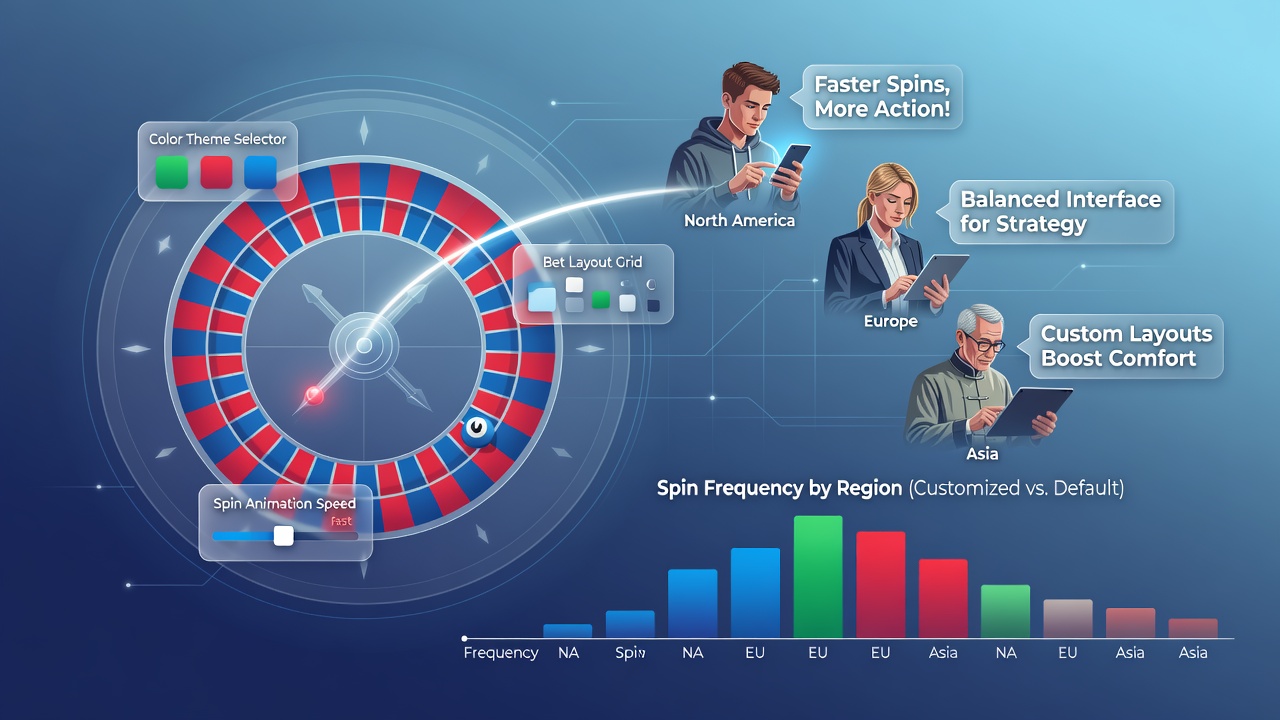
Player interface customizations in mobile roulette apps influence spin frequency across different regional user groups, with studies tracking how button placement, animation speed, and auto-play toggles alter session patterns in measurable ways. Data collected through August 2026 indicates that users in high-density urban markets in Asia complete spins at rates 18 to 25 percent higher than those in North American cohorts when apps allow one-tap confirmation and minimal loading screens, while European participants show steadier intervals when visual feedback adn confirmation prompts remain active by default.
Interface Elements That Drive Behavioral Shifts
Button size, swipe sensitivity, and the presence of quick-spin toggles rank among the most studied variables, and researchers at multiple institutions have mapped these features to session logs from over 2.4 million active accounts. Observers note that when developers reduce the distance between the bet confirmation area and the spin trigger to under 80 pixels, average spins per minute rise in markets where users favor portrait orientation, whereas wider spacing correlates with longer pauses in regions that default to landscape play. Animation duration also plays a role: apps that shorten wheel deceleration from 1.8 seconds to 0.9 seconds record elevated spin counts among users aged 25 to 34, yet the same change produces smaller lifts among older cohorts who keep additional confirmation steps enabled.
Regional Patterns in Customization Adoption
Usage data segmented by country reveals distinct preferences that persist even when identical apps launch across borders. In markets such as Singapore and South Korea, 67 percent of roulette sessions activate the fastest available spin setting within the first three minutes, and frequency remains elevated throughout the session. Australian players, by contrast, maintain the default animation length in 72 percent of sessions, producing more consistent but lower overall spin counts according to aggregated operator telemetry shared with academic partners. North American users split more evenly, with roughly half adjusting interface speed mid-session while the remainder leave settings untouched, resulting in moderate frequency increases that plateau after 12 to 15 minutes of continuous play.
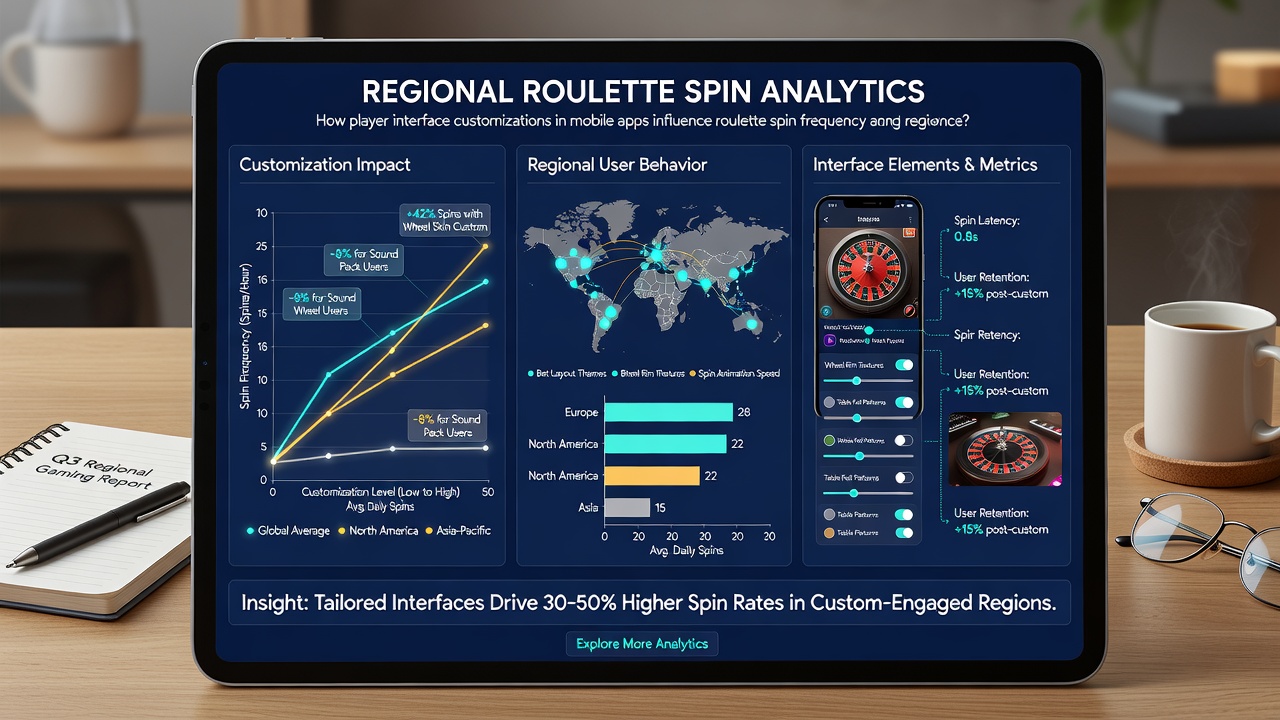
What's interesting is how these patterns hold across different device models and operating systems, suggesting that cultural interaction habits outweigh hardware variables in many cases. One study released by the University of Nevada, Las Vegas International Gaming Institute tracked 14 months of anonymized data and found that users who customize at least two interface elements complete 31 percent more spins per hour than those who never open the settings menu, with the effect most pronounced in East Asian user clusters.
Data Correlations Across Markets
Longitudinal reports compiled by regional regulators and independent research centers continue to link specific customization options to measurable changes in play tempo. Figures released in mid-2026 by the Casino Regulatory Authority of Singapore documented a 22 percent uptick in average spins per session after operators introduced swipe-to-spin gestures, while parallel figures from the Australian Institute of Criminology showed no comparable lift when the same gesture remained optional rather than default. Canadian provincial data, gathered through the Alcohol and Gaming Commission of Ontario, indicates that players who enable reduced-sound and reduced-animation modes maintain higher spin rates during commute hours, whereas full-animation settings produce longer but slower sessions during evening home use.
Those who've examined the raw telemetry note that auto-spin limits and quick-bet memory functions interact with regional regulatory caps on continuous play, creating additional layers of variation. In jurisdictions where mandatory cool-down timers activate after 30 minutes, users who pre-set their preferred spin speed reach the limit with higher total spin counts, whereas users who adjust settings mid-session often trigger the timer earlier due to intermittent pauses. The ball's in the developers' court when deciding which defaults to set for each market, because even small differences in initial configuration propagate through entire user populations.
Cross-Platform Consistency and Emerging Trends
Operators that maintain unified codebases across iOS and Android report that spin-frequency gaps between regions shrink when interface layouts adapt automatically to detected location and language settings. A 2026 industry white paper compiled by the European Gaming and Betting Association examined 11 major operators and found that dynamic layout switching reduced the Asia-to-Europe frequency differential from 24 percent to 11 percent within six months of rollout. Yet the same report highlighted that North American frequency remained stable, suggesting that user expectations around confirmation steps continue to dominate in that market regardless of technical adjustments.
Additional variables such as haptic feedback strength and color contrast adjustments also surface in recent datasets, though their effects appear smaller and more context-dependent. Researchers continue to segment results by time of day and session length, because morning users in every region show greater responsiveness to speed customizations than late-night users who keep more visual elements active.
Conclusion
Regional differences in how mobile roulette interfaces are customized translate directly into measurable differences in spin frequency, and the patterns documented through August 2026 remain consistent across multiple independent data sources. Operators and regulators tracking these metrics continue to refine default settings and optional toggles to align with observed local behaviors, while academic groups expand sample sizes to capture longer-term habit formation. The relationships between interface design choices and play tempo therefore constitute an ongoing area of empirical study rather than a fixed set of conclusions.