Adapting Traditional Poker Tactics for Multiplayer Online Tournaments with Variable Blind Structures
Yves Zimmermann · May 26, 2026

Adapting Traditional Poker Tactics for Multiplayer Online Tournaments with Variable Blind Structures
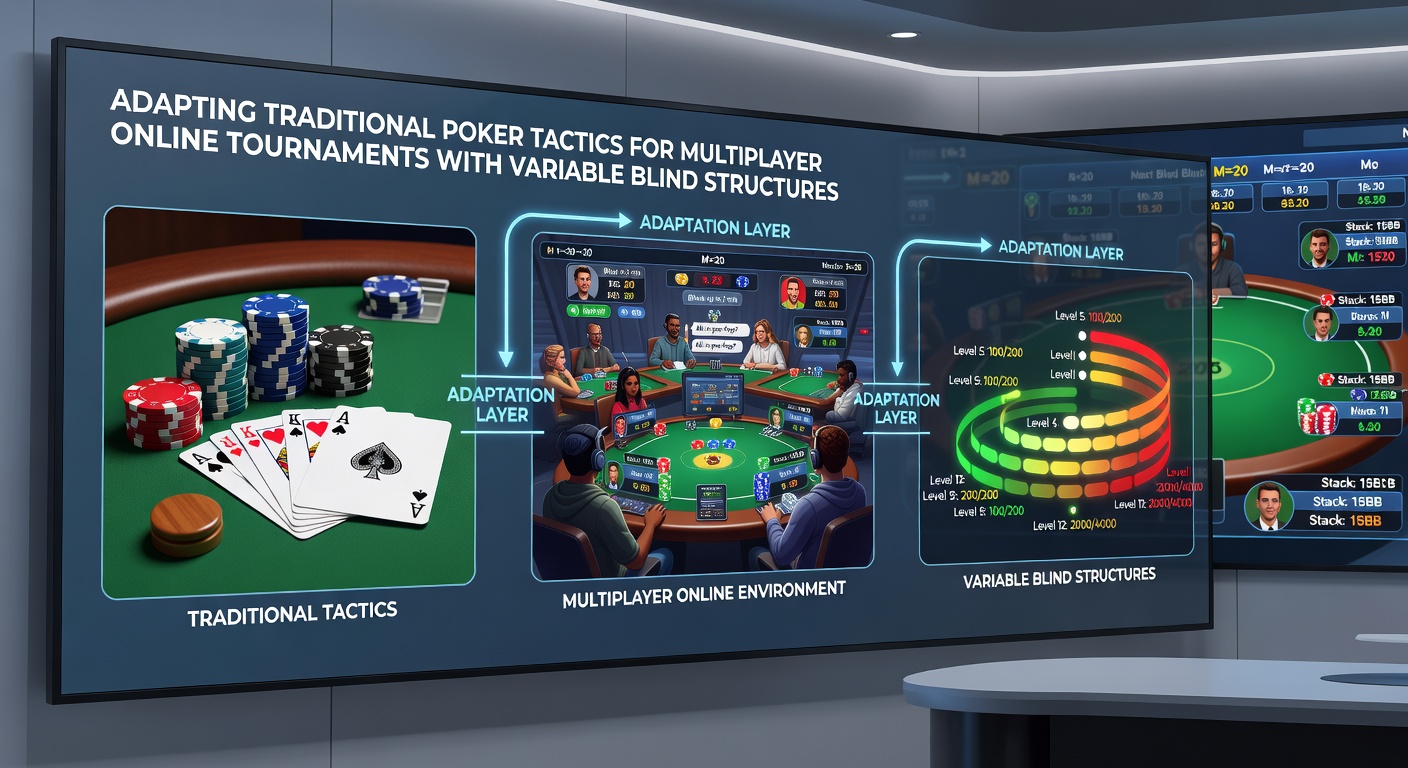
Traditional poker tactics have long centered on position play, hand selection and opponent reading, yet multiplayer online tournaments introduce layers of complexity through variable blind structures that accelerate or fluctuate based on participant numbers and time intervals. Observers note that these structures often compress decision windows compared to live cash games, forcing adjustments in aggression levels and stack management across dozens or hundreds of entrants. Data from industry reports shows that online platforms adjust blind levels dynamically to maintain pace, which alters the risk-reward calculations players apply from early stages onward.
Core Elements of Variable Blind Structures
Variable blind structures differ from fixed schedules by scaling increases according to field size or remaining players, creating periods of rapid escalation followed by stabilization. Researchers at institutions like the University of Nevada, Reno have documented how such formats compress the effective stack depth faster than standard formats, compelling participants to shift from speculative hands to premium holdings earlier in the event. Those who've studied tournament data observe that blinds can double within short windows when player counts drop sharply, turning marginal situations into high-pressure decisions where fold equity becomes paramount.
Multiplayer dynamics add another dimension because table compositions change constantly through bust-outs and re-entries, whereas traditional tactics often assume more static environments. Experts tracking online series point out that late-position steals gain value when blinds accelerate, but early-position opens require tighter ranges to withstand potential three-bets from multiple active opponents. What's interesting is how software interfaces display real-time blind timers and average stack metrics, allowing quicker recalibration than was possible in older live settings.
Adjusting Hand Selection and Position Play
Hand selection under variable blinds demands tighter opening ranges in early stages when structures remain shallow relative to starting stacks, then expands as effective stacks shorten and blind pressure mounts. Studies from Canadian gaming authorities indicate that players who adapt by prioritizing suited connectors and small pairs only in late position during accelerating blind phases achieve higher survival rates into the money. Position remains critical, yet online tools such as heads-up displays provide statistical overlays on opponent tendencies that live players historically lacked, enabling more informed continuation betting decisions.
One documented case involved a large field event where blind levels jumped every twelve minutes after the field halved, prompting successful participants to widen their three-bet ranges from the cutoff while tightening calls from the big blind. Data shows these adjustments preserved chips for later stages when pay jumps became significant, illustrating how traditional positional awareness evolves when combined with platform-specific information streams.
Stack Management and Aggression Calibration
Stack management shifts emphasis toward preserving fold equity during periods of rapid blind growth rather than accumulating small edges through frequent small-ball play. According to figures from the New Jersey Division of Gaming Enforcement, tournaments featuring variable structures see a measurable rise in all-in preflop confrontations once average stacks fall below twenty big blinds. Players who monitor their own stack-to-blind ratios and adjust push-fold charts accordingly outperform those relying solely on memorized live-game heuristics.
Aggression calibration also changes because online interfaces reduce physical tells while increasing the speed of hand histories available for review between levels. Observers tracking events scheduled through May 2026 note that participants increasingly review database statistics during short breaks to identify exploitable patterns among recurring opponents. This practice supplements traditional reads and helps refine continuation frequencies when blind structures create short-stack scenarios that reward precise jamming ranges over speculative calls.
Opponent Modeling in Dynamic Environments
Multiplayer online formats require faster opponent modeling because table assignments rotate frequently and HUD data accumulates across multiple sessions. Traditional tactics that relied on prolonged observation give way to rapid statistical categorization, such as identifying frequent limpers or over-folders to three-bets within the first orbit. Research from Australian academic sources reveals that players who integrate real-time data with positional adjustments maintain higher chip averages through middle stages of variable-blind events.
Re-entry periods further complicate modeling since fresh stacks enter with different motivations, often leading to looser early play that rewards selective trapping strategies. Those monitoring tournament ecosystems find that adapting by tightening value ranges against unknown re-entrants while loosening against established tight players produces measurable edges when blinds escalate unpredictably.
Conclusion
Adapting traditional poker tactics to multiplayer online tournaments with variable blind structures involves integrating positional fundamentals with platform data tools and accelerated timing awareness. Evidence from regulatory and academic sources continues to highlight measurable performance differences between players who recalibrate ranges and aggression based on dynamic blind schedules versus those who apply static approaches. As events progress into 2026, the patterns emerging from large-field competitions suggest that successful adaptation centers on timely stack-depth awareness combined with statistical opponent profiling rather than reliance on any single memorized strategy.